Financing a High-Mileage Car: Smart Auto Loan Strategies for High-Mileage Vehicles
Posted Monday, Jul 13, 2026
Buying a used car with significant mileage can be a smart financial move if you approach financing with care. High-mileage cars and vehicles with over 100k miles often come with lower purchase prices, but financing a high-mileage car requires understanding lending rules, APR, monthly payment impacts, and underwriting guidelines. This guide explains financing options, lender differences, and practical steps to get the best used car loan for older vehicles so you can stay on the road longer without overpaying interest.
What financing options exist for high-mileage cars and high-mileage vehicles?
When financing a high-mileage vehicle, you’ll encounter several financing options: traditional banks, credit unions, dealership financing, and online lenders. Credit unions often underwrite used car loans more flexibly for older or high-mileage cars, offering lower interest rates and manageable monthly payments compared with some dealerships or traditional banks. Shop around to compare loan options and APR before committing.
Dealerships may present attractive loan offers, but sometimes limit the loan terms available for a car with over 100k miles or at certain age or mileage thresholds. Online lenders can be competitive on rates and offer long-term auto loans or tailored loan amounts. Evaluate loan terms, loan amount limits, and whether lenders will finance a 10-year-old or 20-year-old model when deciding where to get an auto loan.
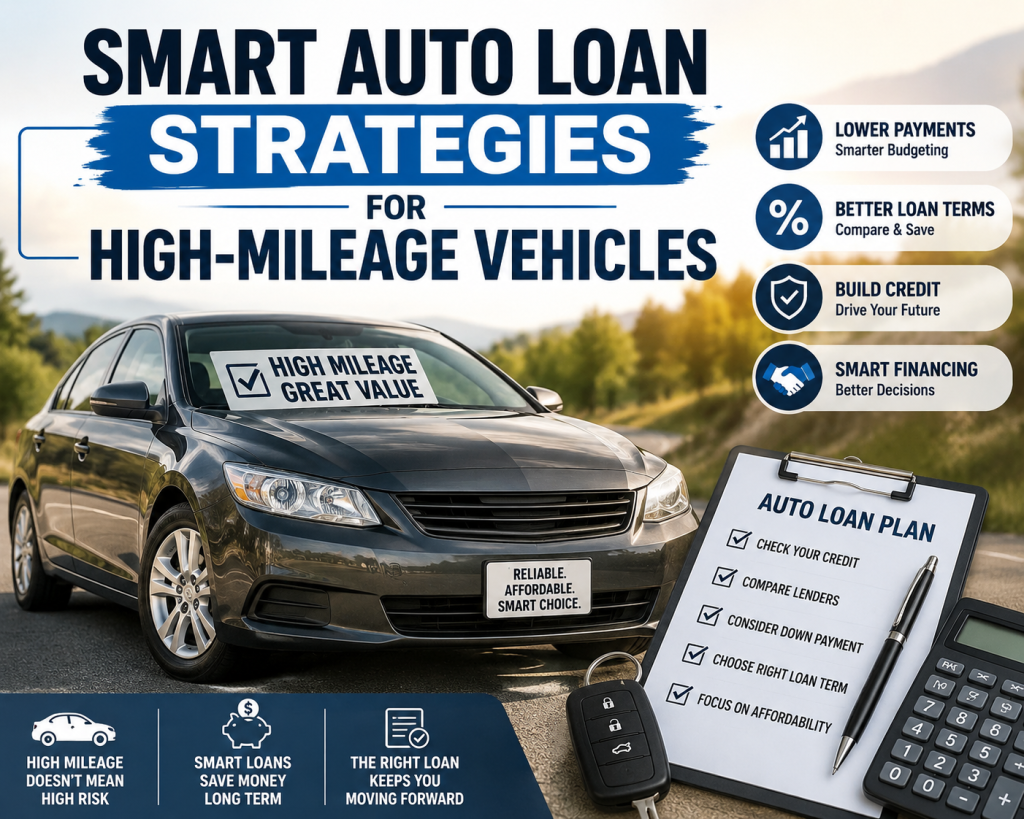
How do lenders evaluate high-mileage cars and mileage car criteria?
Lenders underwrite financing based on vehicle age, mileage, and the borrower’s credit profile. Many lenders use automated underwriting guidelines that flag older vehicles or cars with over 100k miles, which can limit loan terms, such as 60-month terms, or the maximum loan amount. Understanding each lender’s vehicle age and mileage limits will help you find a lender willing to finance an older car at a reasonable APR.
Some lenders apply stricter criteria for high-mileage cars, requiring a higher down payment or offering higher interest rates to offset perceived risk. A clear vehicle history report and maintenance records can improve a borrower’s case and demonstrate a lower risk of mechanical issues despite high mileage.
Should I finance a car with over 100k miles or finance an older car?
Financing a car with over 100k miles can be a smart financial move if the purchase price reflects the mileage and the vehicle has strong reliability records — for example, well-maintained Toyotas often perform well even with high mileage. Consider whether you plan to keep the car long term; if you plan to keep the car beyond the loan term, an older vehicle can save money versus buying a new car with higher prices and steeper depreciation.
Evaluate the car’s current value versus the loan amount to avoid owing more than the car is worth. If the purchase price is low and your financial goals include manageable monthly payments, financing an older car can be preferable to a new and used car mix that inflates costs.
How do credit score and credit profile affect financing a high-mileage car?
Your credit score heavily influences the interest rate and loan terms available when financing a high-mileage car. Borrowers with strong credit profiles may secure lower APRs and longer loan terms, enabling lower monthly payment options. Those with lower scores might face higher interest rates or lenders that restrict loans for higher-mileage vehicles.
To improve your offers, consider prequalification with multiple lenders to see soft credit pull rates or obtain a co-signer to widen loan options. Credit unions typically provide more favorable rates for borrowers with moderate credit profiles and are more willing to finance higher-mileage cars compared to traditional banks.
What loan terms should I seek for a high-mileage car loan and long-term auto loans?
Loan terms for high-mileage cars should balance monthly payment, total interest paid, and the vehicle’s remaining useful life. While long-term auto loans (e.g., 72 or 84 months) reduce monthly payments, they often increase the total interest paid and risk being underwater if you owe more than the car is worth. A 60-month term is common for used car loans, but for older models or high-mileage vehicles, shorter terms might be wiser if affordable.
Consider tying loan length to how long you realistically plan to keep the car. If you expect to keep a high-mileage car for only a few years, match the loan term to that timeframe and avoid paying unnecessary interest. Ask about rate and term options and whether the lender adjusts APR based on loan length or vehicle age.
How can I lower the interest rate (APR) when financing high-mileage vehicles?
To secure a lower APR when financing a high-mileage car, improve your credit score, make a larger down payment, and shop around among lenders, including credit unions and online banks. A bigger down payment reduces the loan-to-value ratio and can lead to better rates. Getting prequalified with multiple lenders allows you to compare APR offers and select the loan that offers the best value.
Maintain a strong credit profile, avoid multiple hard credit pulls in a short time, and provide a full vehicle history report to reassure lenders. If possible, opt for a used car certified by the dealer or with extended warranty options to lower perceived lender risk and potentially get a better rate.
What are the risks and benefits of financing high-mileage cars from dealerships versus credit unions?
Dealership financing can be convenient and fast, but dealerships often have higher APRs or push add-ons that increase the loan amount and monthly payment. Dealerships may have loan options specifically for older models, but it's critical to compare their offers to credit union rates. Sales incentives can make dealership financing attractive on the surface, but read the fine print about rate and term tradeoffs.
Credit unions frequently offer lower interest rates, flexible underwriting, and more borrower-friendly loan options for high-mileage cars. If you’re eligible, joining a credit union and securing a preapproved used car loan can give you leverage when negotiating with a dealership and help you avoid paying extra interest or unnecessary fees.
How much should I put down on a high-mileage used vehicle to get the best financing terms?
A larger down payment reduces the loan amount and improves your loan-to-value ratio, which often results in lower interest rates and fewer situations where you owe more than the car is worth. For high-mileage vehicles or cars 10 years old or more, consider a down payment of at least 10–20% to offset the lender’s perceived risk and to lower monthly payments.
If cash is limited, prioritize offers with shorter loan terms and lower APR over extended terms that reduce monthly payment but increase total interest paid. Balancing down payment size with a manageable monthly payment and your overall financial goals ensures the auto loan is a smart financial move.
What should I check in a vehicle history report for high-mileage cars before financing?
A vehicle history report reveals past accidents, title issues, odometer discrepancies, and service history — crucial details when financing a mileage car. Lenders rely on accurate odometer and vehicle history information to underwrite a loan; discrepancies can lead to financing denial or higher interest rates. Look for consistent maintenance records to strengthen your financing application and justify financing a high-mileage car.
Also, confirm whether any previous damage might affect the car's worth today. If the purchase price is fair and the report shows no major problems, lenders are often more comfortable extending an auto loan for an older vehicle. A clean vehicle history report can mean the difference between a competitive used car loan and a risky, expensive financing option.
How can I shop around and compare loan options effectively for high-mileage cars?
Shopping around is essential. Get prequalified offers from multiple lenders — credit unions, traditional banks, online lenders, and dealerships — and compare APR, loan terms available, fees, and maximum loan amount. Use a consistent loan request (same purchase price and down payment) to compare apples to apples. Pay attention to whether lenders will finance a car with over 100k miles or have limits by vehicle age and mileage.
Negotiate the purchase price separately from financing to avoid inflated loan amounts and unnecessary interest. Obtain written loan estimates and use them to bargain for better terms. Check whether lenders offer rate and term discounts for automatic payments or if they charge prepayment penalties that may affect your financial flexibility.
What are smart post-financing steps to protect my investment in high-mileage vehicles?
After financing a high-mileage car, prioritize preventive maintenance and track mileage to keep the vehicle in reliable condition. Regular service records not only prolong vehicle life but also maintain value in case you refinance or sell. Consider setting aside an emergency maintenance fund to avoid late payments that could harm your credit profile.
If your financial situation improves, consider refinancing to a lower APR or shorter loan term to save on interest. Keep monitoring car prices and your local market — used car values change — and stay informed about loan terms available for high mileage vehicles so you can make the most cost-effective auto financing decisions.
How do high-mileage car loans affect monthly payments and overall cost?
High-mileage cars typically have lower purchase prices, which reduces the loan amount and can lower monthly payments, but higher APR and limited loan terms can offset those savings. The total cost depends on the interest rate, loan term, and any fees rolled into the loan. Calculate the total interest paid across the life of the loan to compare financing offers effectively.
Use a loan amortization estimate to understand how much you will pay in interest versus principal each month. Aim for manageable monthly payments that fit your budget while avoiding excessively long loan terms that increase the amount you pay in interest over time.
What special considerations apply when financing higher-mileage brands like Toyotas or other reliable older models?
Some brands, like Toyotas, have reputations for durability and can command lender confidence even with high mileage. Lenders may be more willing to underwrite loans for well-known, reliable models, enabling better financing options and lower APRs. Highlighting brand reliability and maintenance history can make a big difference when applying for a high-mileage car loan.
Document factory recalls, regular servicing, and any replaced components to strengthen the underwriting case. When financing a higher-mileage Toyota or another reliable older model, present comprehensive vehicle records to the lender to improve loan terms and show you’re a low-risk borrower.
Conclusion: Key takeaways for financing high-mileage vehicles
- Shop around: Compare credit unions, traditional banks, online lenders, and dealership financing to find the best APR and loan terms.
- Know lender criteria: Verify vehicle age and mileage limits; some lenders restrict loans for cars with over 100k miles.
- Improve your offer: Boost down payment, clean up credit, and present a detailed vehicle history report to lower APR.
- Choose sensible loan terms: Balance monthly payment with total interest paid; avoid excessively long terms for older cars.
- Include maintenance records: Consistent service history reduces underwriting risk and can secure better loan options.
- Consider refinancing later: If rates fall or your credit improves, refinancing can save on interest and shorten loan terms.
Financing a high-mileage car can be a smart, cost-effective strategy when you understand loan options, APR impacts, and underwriting guidelines. Whether you’re working with a credit union, traditional bank, or dealership, focus on the total cost — interest rate, loan terms, and the purchase price — to make an informed auto financing decision. If you’re looking to buy used cars locally, consider trusted dealers like VIP Autos, a Used Car Dealer in Hemet, CA, who can help you find high-mileage cars and navigate financing a high-mileage car with affordable car financing and used car loan options to meet your needs.