Boost Your Credit Score to Get a Better Auto Loan
Posted Wednesday, May 13, 2026
Improving your credit fast to qualify for better auto loans can save you thousands in interest over the life of the loan. Whether you're applying for a car loan for a new car or a used vehicle, understanding how lenders evaluate your credit score, credit report, and credit history helps you take targeted steps to get approved and secure a lower interest rate. This guide covers practical ways to improve your credit score, what affects your credit, and how to position yourself to buy a car with better loan terms.
How can checking your credit report help you get a car loan?
Before you apply for an auto loan, check your credit report from the three major credit bureaus—Experian, Equifax, and TransUnion—to spot errors that might lower your credit score. Disputing inaccuracies can improve your credit profile quickly if incorrect late payments, duplicate accounts, or wrong loan amounts are removed. Regularly checking your credit report also helps you monitor for identity theft or fraud that could negatively affect your ability to get approved.
When you check your credit, look at items that affect your score, such as credit card balances, loan term history, new credit inquiries, and the length of your credit history. Correcting mistakes on your credit report may change your credit score enough to qualify for better auto financing and lower auto loan rates when you apply for a car loan.
What steps can raise your credit score before applying for a car loan?
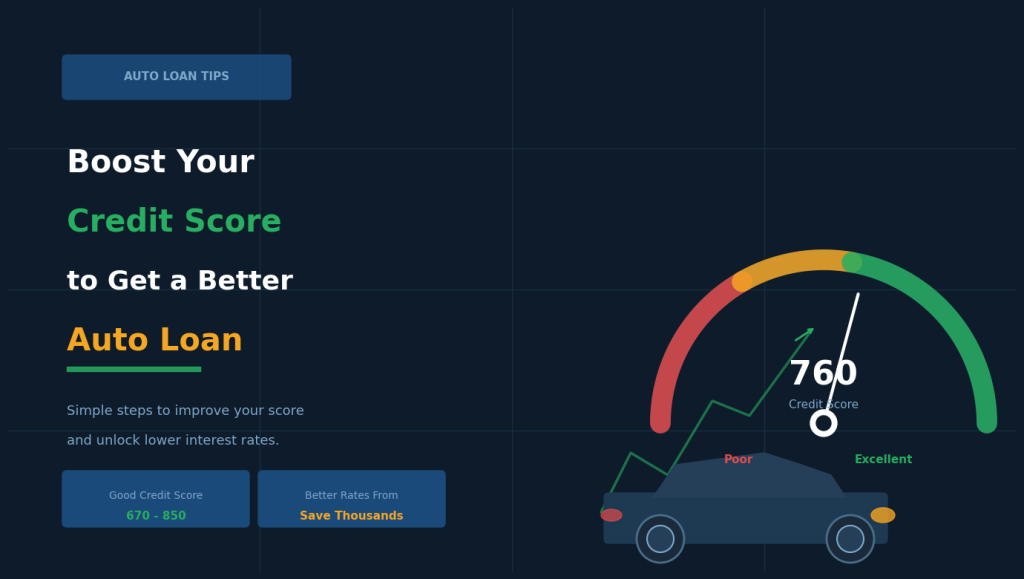
To raise your credit score quickly, focus on lowering credit card balances and improving your credit utilization ratio by paying down revolving debt. Paying down credit card debt reduces your credit utilization—the percentage of total available credit you're using—which is a major factor in your FICO score and can improve your score in weeks, improving your chances for a lower interest rate.
Other important steps include avoiding new credit applications (new credit inquiries can lower your score temporarily), keeping older accounts open to preserve the length of your credit history, and ensuring on-time payments to build credit consistently. Small, consistent wins like bringing past-due accounts current or making extra payments toward a loan amount can help rebuild your credit and position you for better auto financing.
How does credit utilization affect your auto loan interest rate?
Credit utilization ratio—total credit you're using divided by total available credit—directly affects your credit score and the interest rate you’re offered on a car loan. High credit card balances signal risk to lenders and often result in higher interest rates or being offered only bad credit loan options. Lowering balances to reduce utilization can lead to better auto loan rates and stronger loan offers from credit unions and banks.
Strategies to improve credit utilization include requesting a credit limit increase (without applying for new credit), paying down balances, or spreading balances across cards to reduce the utilization ratio on each account. Each tactic can help improve your score and reduce the life of the loan costs through lower interest rates.
Should you consider a credit union to get a better auto loan?
Credit unions often offer lower auto financing rates and more flexible loan options compared to big banks, especially for members with improving credit. Joining a credit union can be a useful strategy to get a car loan with a lower interest rate or a more favorable loan term when your credit score is still building or is just above subprime levels.
Compare auto loan rates between credit unions and other lenders, consider pre-approval offers, and understand how loan amount and loan term affect monthly payments. A pre-approved loan from a credit union can also give you bargaining power with used car dealers when shopping for used cars for sale.
How will new credit applications affect your chances of getting a car?
Applying for new credit right before applying for an auto loan can temporarily lower your credit score due to hard inquiries, which may affect the credit score to get the best rates. Multiple inquiries in a short period can signal risk and lead to higher interest rates or worse loan terms. If you need new credit to increase total available credit, plan those applications well before applying for a car loan.
Rate-shopping for an auto loan is typically treated as a single inquiry if done within a short window, but opening several new credit card accounts just prior to financing a car may hurt your chances. Balance the potential benefit of more available credit against the short-term impact on your credit profile and apply strategically.
What role do payment history and on-time repayment play when financing a car?
Payment history is the single biggest factor in most credit scoring models and has a major impact on the auto loan rates you’ll be offered. Making on-time payments on credit cards and existing loans shows lenders you can repay the loan and significantly improves your credit score over time. If you’ve missed payments, bringing accounts current and setting up automatic payments can stop the negative impact and start to rebuild your credit.
Rebuilding a consistent record of on-time payments can improve your chances of getting approved for a better auto loan and securing lower interest rates. Even small, consistent payments on credit card bills and repaying installment loans help demonstrate reliable repayment behavior to credit bureaus.
How can you build credit fast if you have bad credit?
If you have bad credit, consider secured credit cards, credit-builder loans, or becoming an authorized user on a well-managed account to build credit quickly. These actions can help improve your credit mix and overall credit profile, which can raise your score and improve your chances for better loan options when applying for a car loan or financing a car.
Work with lenders that offer rehabilitation programs, and consider a co-signer for an auto loan to get better rates while you rebuild. Consistent on-time payments, lower credit card balances, and sensible use of available credit all contribute to boosting your credit score over months rather than years.
What loan options can help you get a car with a lower interest rate?
Explore loan options like shorter loan terms, larger down payments, and pre-approval offers to secure lower interest rates. A lower loan amount and shorter loan term typically yield better auto loan rates, reducing the total interest paid over the life of the loan. If your credit is improving, shop around for the best loan to find lower monthly payments and better overall loan terms.
Consider refinancing later if your credit score improves after buying a car. Refinancing can lower your interest rate and monthly payment, effectively reducing the cost of the loan after you’ve had time to improve your credit score and overall credit profile.
How can checking FICO scores and credit bureau reports affect your loan application?
Knowing your FICO score and monitoring reports from Experian, Equifax, and TransUnion helps you understand the credit score to get the best rates and what factors affect your score. Lenders use variations of FICO or VantageScore to set auto financing terms, so checking these scores can guide whether to wait, take steps to improve your score, or apply now.
Dispute errors with the credit bureaus, pay down high credit card balances, and avoid actions that might hurt your credit in the short term. These tactics can improve your score and help you secure better loan offers when you apply for an auto loan.
What practical tips improve your chances of getting approved for better auto loans?
Practical tips include increasing your down payment, choosing a shorter loan term, getting pre-approved, and comparing offers from credit unions, banks, and online lenders. Lowering your loan amount and improving your credit utilization and payment history are high-impact ways to get better rates. Keep old accounts open to preserve the length of credit history and avoid closing cards right before applying for financing.
Also, maintain a mix of credit types—installment loans and revolving credit—to improve your credit mix. If you’re getting ready to buy a car, make major changes such as opening new accounts or co-signing loans so they don’t negatively affect your score at application time.
Which popular used car models and features should buyers consider when applying for a car loan?
When shopping for used cars for sale, consider models that hold value, have low maintenance costs, and are commonly accepted by lenders. Popular used vehicle models often sought by buyers include: Toyota Camry (reliable engine, fuel efficiency, safety features), Honda Civic (strong resale, low ownership cost, modern infotainment), Honda Accord (comfortable ride, good fuel economy, safety tech), Toyota Corolla (compact reliability, low repair costs), Ford F-150 (versatile truck, towing capacity, durable), Chevrolet Silverado (powerful performance, various trims), Subaru Outback (all-wheel drive, cargo space, safety), Nissan Altima (comfortable midsize, fuel efficiency), Hyundai Elantra (value-packed, warranty), Kia Optima/K5 (value, features, warranty).
Compare features like fuel economy, reliability ratings, safety features, and typical loan amounts lenders approve for these models. Choosing a reliable, in-demand model can help you get better auto financing terms because lenders view these vehicles as lower risk. Always check loan options, possible interest rate differences by model year, and whether a dealership or credit union offers promotions for certified pre-owned vehicles.
Summary
How to improve your credit fast to qualify for better auto loans requires focused actions: check your credit report with Experian and Equifax, reduce credit card balances to improve credit utilization, maintain on-time payments, avoid unnecessary new credit, and consider credit unions and pre-approval to get lower interest rates. Improving your credit profile, building credit smartly, and choosing the right loan options will improve your chances to get a car loan with better rates and terms.
For buyers researching pre-owned vehicles, VIP Autos, a Used Car Dealership in Hemet, CA, can help you explore financing options and used cars for sale. As trusted used car dealers, they work with buyers with varying credit histories to find suitable loan options and competitive interest rates at reputable used car dealerships.